

Key dealers
- Bitcoin’s decline today is affected by results in US-Kina trade and geopolitical tensions involving Israel and Iran.
- The potential for future cuts of the Federal Reserve interest rate increases despite a slight decline in May’s heading inflation figures.
Bitcoin’s early rally to $ 110,000 lost rapid speed when trade calls in USA-Kina, despite some signs of progress, failed to impress, and tensions increased after Israel told us they were ready to start an operation to Iran.
Bitcoin touched $ 110 300 On Wednesday after a better than expected, CPI print, with heading inflation rise by 2.4% compared to the previous year, slightly below the forecast 2.5%. The figures offered a brief upswing despite concerns about customs -driven inflation pressure.
The largest crypto supply also found support from President Trump’s announcement of progress in trade calls in USA-Kina on the day. But analysts say New Deal is still slim In extent, largely focused on rare earth export controls.
According to Capital Economics Mark Williams, major barriers to trade are untouched, with customs still 55% on Chinese goods and 10% on US exports.
Analysts suggest that it is more a break than a resolution, although the administration framed the deal as a profit.
No interest rate cuts expected during the summer
Fed is not expected to lower interest rates at its political meeting next week.
Although May’s CPI came slightly below expectations, inflation increased to 2.4% compared to the previous year, up from 2.3% in April, and remains over the Fed’s goal of 2%.
In combination with stronger work growth than expected, this has led to the market participants almost completely excluding the possibility of an interest rate cut in June, according to CME Fedwatch data.
The odds for an interest rate cut in July also decreased after the new inflation data and left September, November and December as the only realistic windows that are facilitated this year.
The markets are now praising in a 74% chance of an interest rate reduction in September and rises to almost 88% in November and about 96% in December.

Nic Puckrin, co -founder of The Coin Bureau, notes that surplus of retail initiatives and falling housing prices can drive an overall trend with lower inflation in the coming months.
The analyst expects that persistent low inflation can cause Fed to lower prices in the coming months, which potentially strengthens Bitcoin’s upward momentum.
Bitcoin drops, gold waves when the Middle East looms of looms
Geopolitical tensions escalated on Wednesday when Israel signaled that it was prepared to start a military operation aimed at Iran’s nuclear power program, according to CBS News.
In response, the United States reportedly issued a warning for Americans to leave Iraq, citing “increased regional tensions.”
The growing threat of conflict comes when the United States tries to strike a deal to limit Iran’s nuclear programs.
Trump’s envoy, Steve Witkoff, said that Nuclear Power Calls with Iran will continue; However, Israel’s potential military measures can dramatically escalate regional tensions and influence US interests.
Spot Gold nailed to $ 3,377 during the early Asian trading period on Thursday following the new development in the escalating Israel-Iran conflict, according to Tradingview data.
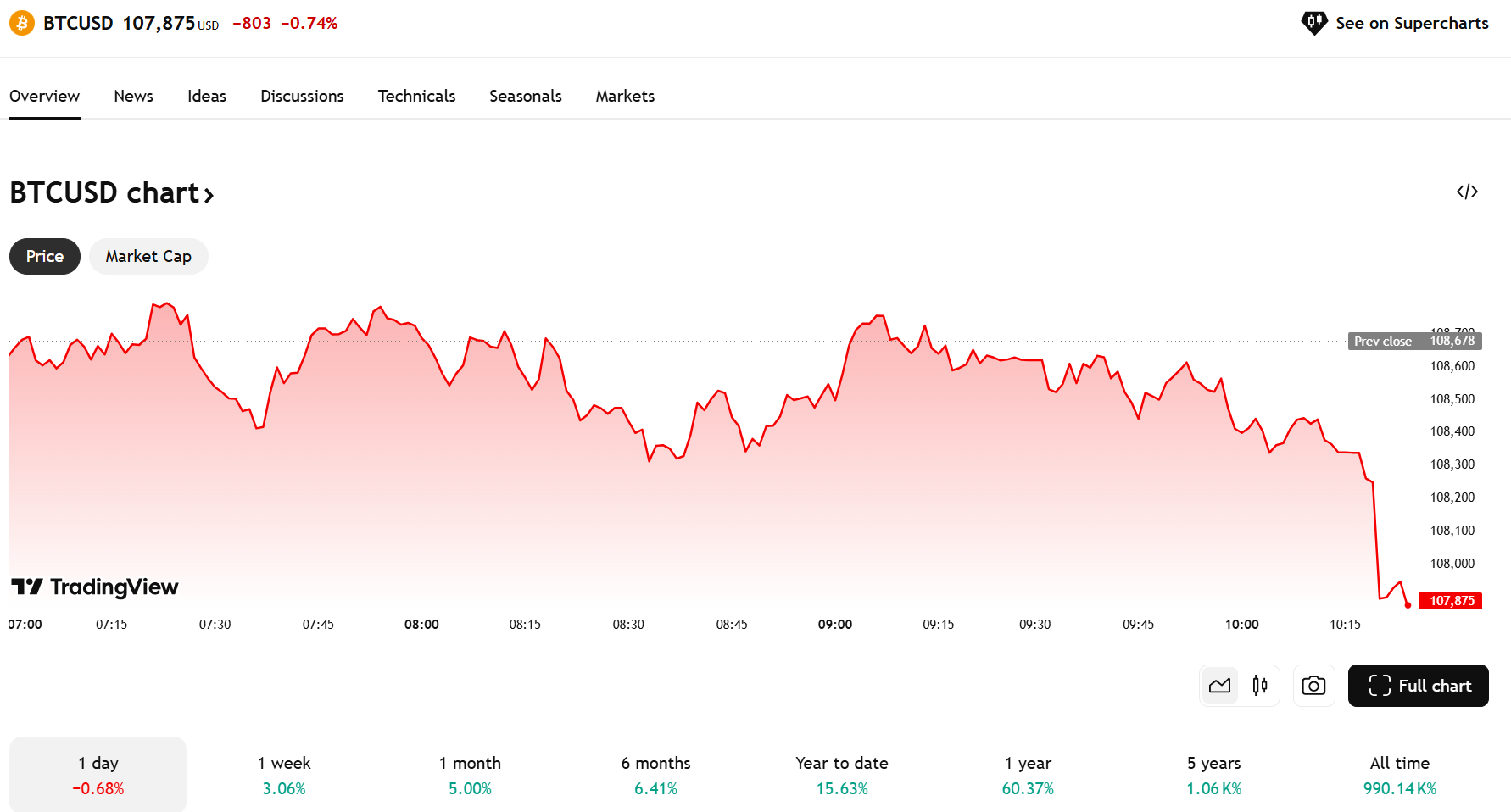
At the same time, Bitcoin dipped under $ 108,000 and published a modest decline on the daily chart.
Bitcoin has historically experienced short -term price protection during periods of geopolitical chaos and increased uncertainty, as investors often go towards traditional safe guys.
However, digital asset has often hoped back relatively quickly because of its growing recognition as a digital store of value.