
Nigerian banks must adopt digital assets and blockchain in order to remain competitive, but must handle exposure as risks are in abundance, says global consultant giant KPMG in its latest report.
The ReportPublished in collaboration with chain analysis, broke down Nigeria’s adoption of digital assets Over the past four years, the opportunities it has presented to the West African nation and the risks prevail in the rapidly growing sector.
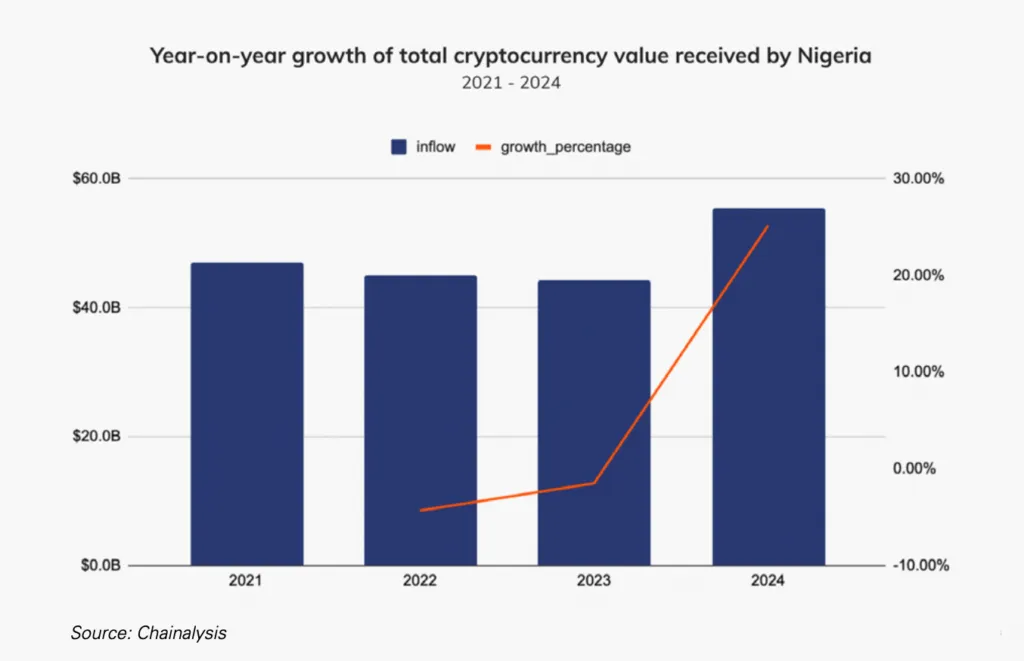
According to the report, the total digital asset value recovered by the Nigerians recovered last year and grew by 25% compared to three years of consecutive dip. Of the $ 125 billion that Sahara Africa received during the year ending June 2024, Nigeria’s $ 59 billion accounted for almost 50%.
For Nigerians are not digital assets not ‘Digital gold“or speculative assets for wealth overnight. The report notes that 85% of the total value was in small denominations, linked to retailers who used digital assets to move the value across borders.
And yet, despite the clear adoption trends, Nigerian banks are still unwilling to adopt digital assets or work with VASPs. This concern is not unfounded: Nigeria Central Bank (CBN) has been anti-BTC for several years and issued two circular that prohibit banks from getting involved in the sector. 2022, CBN met six banks With an N1.31 billion dollars ($ 3,155 million) fines to serve customers who handle digital assets.
But much has changed since then and the Nigerian government, under President Bola Tinubu, has been more welcoming the sector. Last year, that Issued the first two VASP licenses to local exchange Busha and Quidax.
“Therefore, the question is not about whether banks should get involved in crypto, but rather it is about how to handle their exposure to crypto, while also exploiting the opportunities there,” says KPMG.
However, banks must be aware of the unique risks that digital assets pose, which their existing risk monitoring frames are poorly equipped to manage.
“PseudonymityThe speed of transactions on the chain and the use of intermediaries with varying degrees of supervisory surveillance makes conventional risk assessment and surveillance insufficient, ”the report noted.
Blockchain, however, also offers advanced capacities for banks to manage risks and monitor transactions, added it. Its invariability and openness provide real -time visibility in the flow of funds, a dynamic that is not found in Legacy Finance today.
Nigerian banks that integrate blockchain “improves their ability to detect illegal financing, expanding to new financial services and positioning themselves at the forefront of an increasingly digital financial system.”
In the meantime, Nigeria’s action against Binance For tax denting and avoiding surveillance continues. This week, a local outlet revealed that the exchange offered to pay $ 5 million as a payment for its tax obligations last year to secure the release of the then held official Tigran image. He has since was released after an agreement between the Nigerian and the US governments.
Watch: Blockchain changes Nigeria’s technical city ecosystem
https://www.youtube.com/watch?v=jof2gir1txm Title = “Youtube video player” Ramborder = “0” Allow = “Accelerometer; Autoplay; Clipboard Writing; Encrypted Media; Gyroscope; Image-in-Bild; Web Dividend” Reference Policy = “Strict-Origin-When-Cross-Origin” Allowing Lorscreen = “>”