
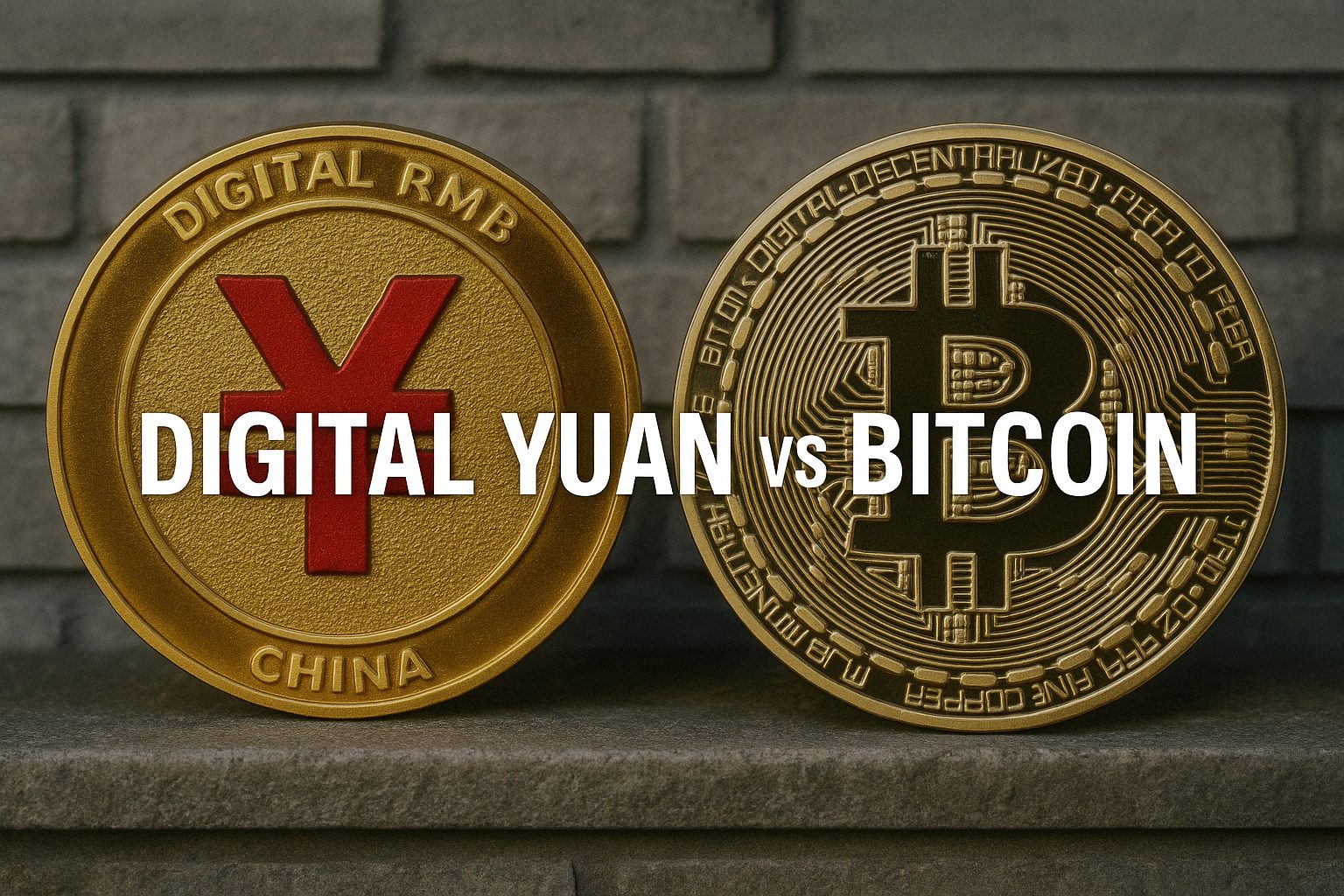
Digital Yuan vs. Bitcoin competition has definitely been intensified in recent months when China continues to aggressively expand its state-controlled CBDC, while the United States also includes Cryptocurrency. This ongoing economic power struggle represents two completely opposite visions for the future of money – centralized control versus decentralized freedom.
Also read: New American Sanctions Against 30+ Chinese Companies Spikes Delivery Disciples for Shares
How CBDC -Adoption, US Crypto Laws and China’s AI politics collide

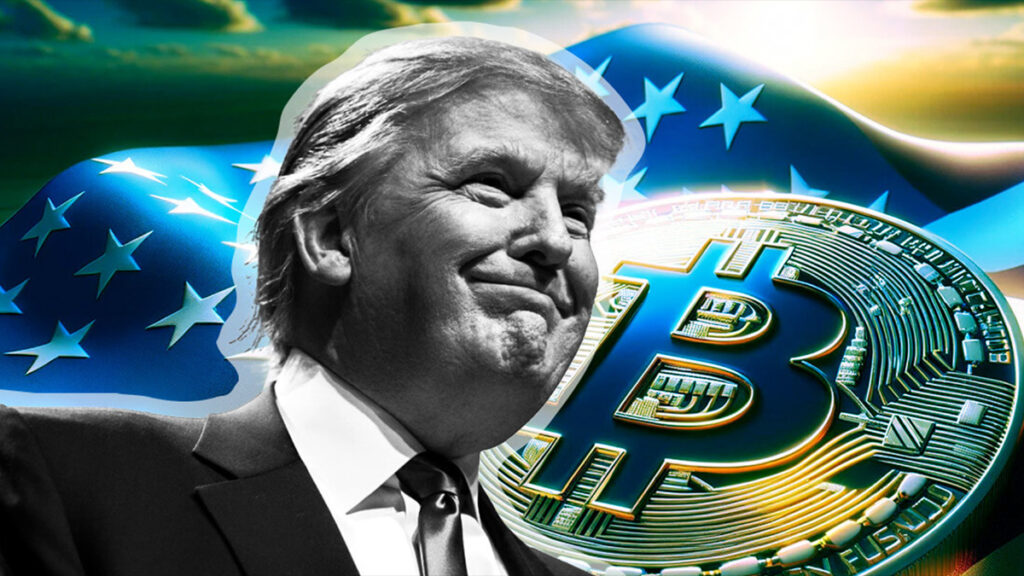
Trump’s Bitcoin strategy vs China’s digital yuan
Rope. Dusty Johnson stated:
“This is about blockchain technology and every industry over the next 20 or 30 years, the rear end of that industry will be transformed by blockchain.”
At the same time, China has already launched its digital Yuan over dozens of cities right now. In Changshu, for example, public workers currently receive their salaries in E-CNY, and over 10 million merchants now accept it as well. China also recently announced to connect its digital RMB to all 10 ASEAN countries and 6 Middle East’s nations-potentially circumvent about 38% of global trade through the US-dominated SWIFT system.
CBDC -Adoption accelerates globally
The PBOC specified in their press release:
“We will firmly promote the development and application of digital RMB.”
Three specialized CBDC-based service centers are currently being established at Shanghai airports specifically for international visitors, which really highlights China’s global ambitions for its digital currency.
Also read: XRP Price President: $ 10,000 in XRP could turn your future until 2030
This ongoing digital Yuan vs. Bitcoin competition represents a basic CBDC adoption challenge: Can state-controlled digital currencies coexist with decentralized crypto courses like Bitcoin in the future?
US regulatory challenges
Despite Trump’s seemingly crypt -friendly attitude, the regulatory landscape remains quite controversial at present. The Senate recently failed to promote the Genius Act for Stablecoin regulation, and opinions are definitely divided.
Late Jeff Masterley criticized the bill:
“The question is, this bill actually regulates something? And the answer is no.”
Late Josh Hawley expressed various concerns about the legislation:
“If you are worried about what a private person does, how much more should you be worried about the largest companies in the world that issue their own currencies? Is that really what we want?”
These regulatory obstacles clearly illustrate the complex balance between Digital Yuan vs. Bitcoin procedure for financial innovation in today’s rapidly changing landscape.
Freedom vs Control In Digital Finance
Digital Yuan and Bitcoin basically oppose plans for what the economic future can be. CBDCs give governments greater control over the economy, make payments faster, help more people participate in banks and help reduce the crime, even if they also lead to less integrity and can interfere with traditional banks.
However, using Bitcoin will be able to manage your finances without central control, worldwide asset and transparent processing, but there is still the issue of frequent price fluctuations and the difficulty in managing regulations.
Also read: Trump opens Saudi Checkbook: 13 US stocks in the middle of $ 600B business
Not fewer than 130 countries develop digital currencies, while the Cryptocurrency use is increasing around the world. China’s AI influence in financial sectors seems to serve its digital currency goals by giving the government better control over financial transactions.
What is currently being developed is an arrangement where CBDC takes care of common financial functions, while Bitcoin and similar crypto courses provide extra autonomy from traditional financial institutions that are monitored by governments.