

The US Bitcoin loss has at the time of writing shaken Cryptocurrency -Ecosystem as the White House recently revealed that previous sales have mainly cost US taxpayers an astonishing $ 17 billion in the midst of extreme market vollatility. With Bitcoin Price floating around the $ 80,000 brand right now, the Trump administration has the tip of a dramatic shift in policy against further divestment despite ongoing uncertainty in the legislation and also various investment fluorine that continue to torment the sector.
Also read: FIFA explores launching ‘FIFA -coin’ to revolutionize fan -engagement
Why White House’s $ 17B Bitcoin loss signals Market Volatility and Regulatory Risks

$ 17 billion mistake: US Bitcoin loss division
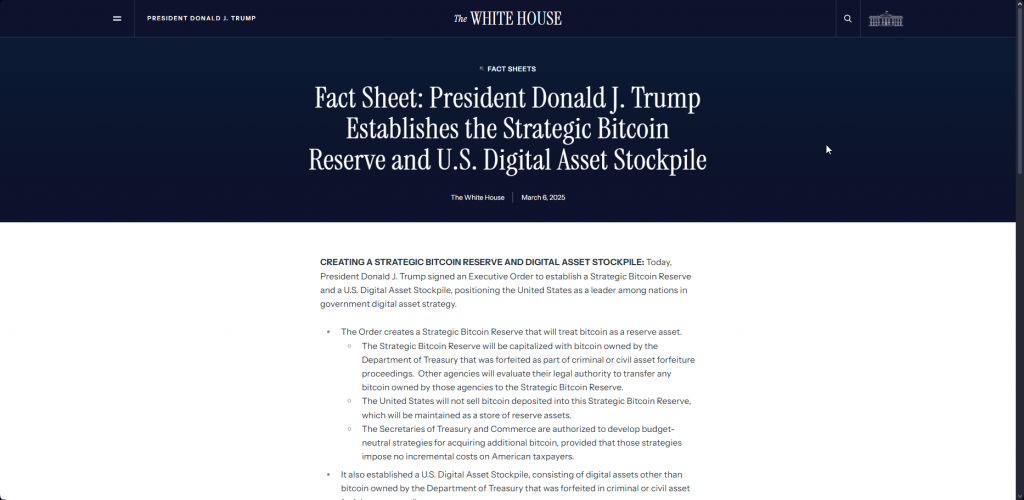
White House AI and Crypto Czar David Sacks stated:
“Over the past decade, the federal government sold approximately 195,000 bitcoin for revenue of $ 366 million. If the government had had bitcoin, it would be worth over $ 17 billion today. This is how much it has cost US taxpayers not to have a long -term strategy. “
This significant US Bitcoin loss upset has catalyzed Trump’s executive order to establish a strategic Bitcoin reserve to prevent similar market vollatility-induced losses over several important investment areas in the future.
Trump’s response to us Bitcoin loss: “Never Sell” “policy
At the first time White house crypt meetingPresident Trump has actually criticized previous Bitcoin sales in the midst of ongoing price fluctuations and also many investment fluorine that continue to focus on vulnerable investors.
“Unfortunately, in recent years, the US government has stupidly sold tens of thousands of bitcoin, which were worth billions and billions of dollars if they did not sell them. But they sold them, mostly during the Biden administration – not good to have done. “
The president then constructed what seems to be a permanent political transformation:
“From this day America will follow the rule that every bitcoins know very well: Never sell your bitcoin.”
Also read: BRICS: New country that aggressively pursues to join the Alliance
The strategic Bitcoin reserve will primarily include several significant digital assets obtained through loss procedures for assets, which helps to mitigate the former US Bitcoin loss while an innovative digital asset management creates an innovative approach despite persistent market voltility and such uncertainty.
Market response in the midst of investment risks
Despite bold political statements that deal with the US Bitcoin loss, Bitcoin has from now on struggled to maintain momentum due to uncertainty in the legislation. Cryptocurrency has recently retreated to the $ 80,000 interval after briefly exceeding $ 100,000 earlier.
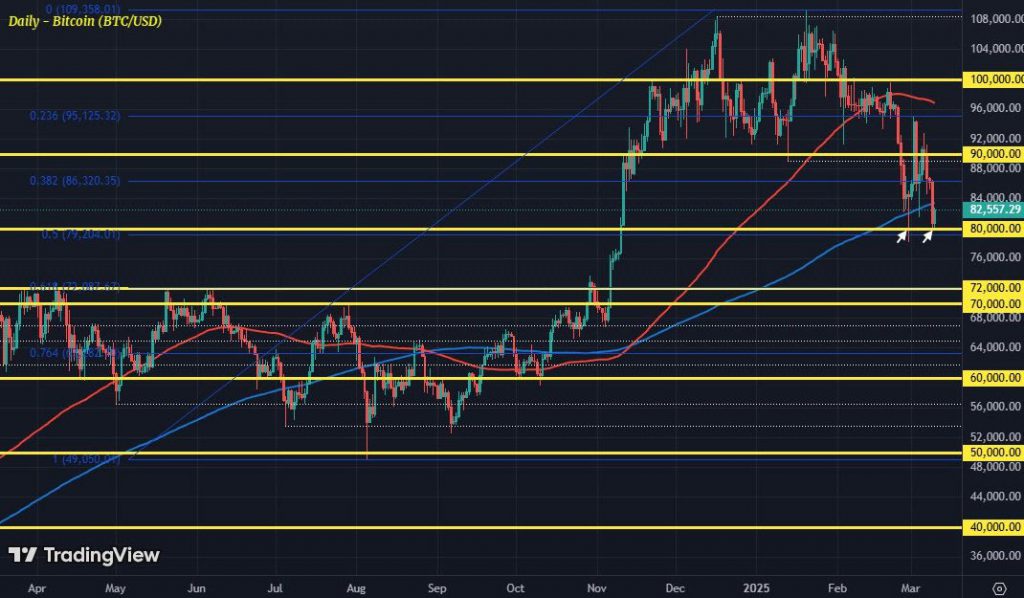
Market analyst Justin Low noted:
“The lack of Polish sent Bitcoin over the weekend to test for the $ 80,000 brand and this is where we can also start the new week.”
This technical development, including breaking under 200-day sliding average, has intensified various major concerns about bitcoin price stability and investment fraud aimed at vulnerable market participants in several important trading platforms.
Also read: PI NETWORK: S 14 March KYC -Time Deadline: 80% at risk when pi drops 16.3%
Future prospects after the US Bitcoin loss revelation
While Trump’s response to US Bitcoin loss represents a significant policy review, the direction of the regulatory at this time remains somewhat unclear. The secretaries of the Treasury and Trade have been approved to develop acquisition strategies in the midst of ongoing market vollatility, provided that these approaches “Introduce no incremental costs for US taxpayers.”
For now, when Bitcoin prices float about $ 80,000, and even with market conditions that are quite unpredictable at present, how the administration’s strategy will actually utilize the government’s finances and the broader digital asset market to see. Significant American Bitcoin loss has certainly, at the time of writing, pioneers on a reconsideration of the federal Cryptocurrency policy, potentially create, for example through various regulatory mechanisms, long-term consequences for both institutional and also retail infesters who are currently providing uncertainty and also trying to avoid the regulation of regulations of regulations of regulations and also trying to avoid the regulation of regulations and also trying to avoid the regulation of regulations and also trying to avoid the regulation of regulations and also trying to avoid the regulation of regulations and also trying to avoid the regulation of regulations and also trying to avoid the regulation of regulations. In recent months, which currently have navigated in regulating regulatory uncertainty.